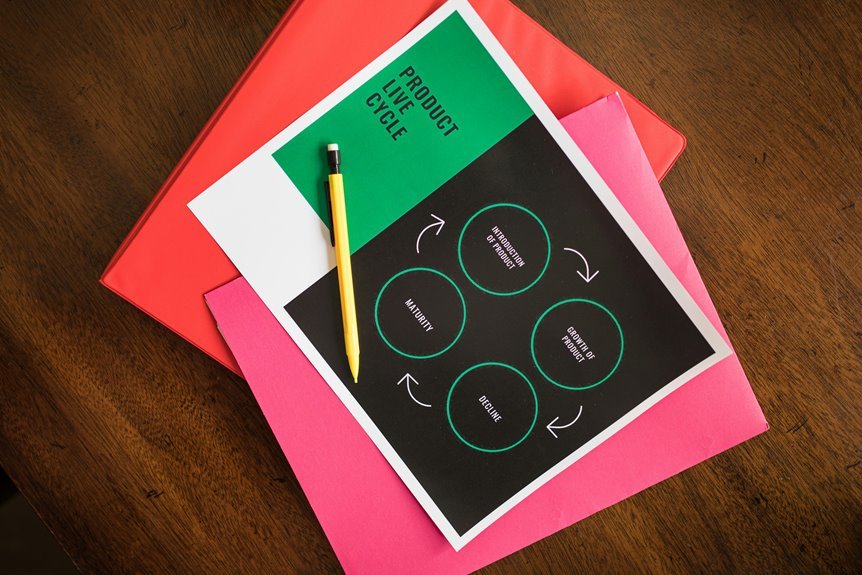
The business cycle encompasses distinct phases: contraction, recession recovery, and expansion. Each stage plays a pivotal role in shaping consumer behavior and guiding business investments. Economic indicators, such as GDP growth and inflation rates, provide critical insights into economic health. Understanding historical patterns is essential for forecasting future cycles. However, the implications of these fluctuations on policy decisions and investment strategies warrant further examination. What factors will influence the next phase of this cycle?
Phases of the Business Cycle
The business cycle comprises a series of predictable phases that economies experience over time, characterized by fluctuations in economic activity.
These phases include contraction, where economic performance declines, followed by recession recovery, leading to expansion.
Each phase influences consumer behavior and business investments, ultimately impacting overall economic freedom.
Understanding these dynamics aids in navigating the cyclical nature of economic environments.
Economic Indicators and Data Points
Economic indicators serve as critical barometers for assessing the health of an economy and predicting future performance.
Key metrics such as GDP growth rates and inflation rates provide insights into economic growth trajectories and potential risks.
Impact on Investments and Policy Decisions
How do economic indicators shape investment strategies and policy formulation?
Investors analyze data trends to optimize investment strategies, responding to shifts in economic conditions.
Concurrently, policymakers utilize these indicators for timely policy adjustments, aiming to foster economic stability.
This interplay between investment decisions and policy actions underscores the importance of data-driven approaches in navigating the complexities of the business cycle, ultimately promoting informed economic freedom.
Historical Trends and Future Projections
Understanding historical trends in the business cycle provides critical insights for forecasting future economic conditions.
Historical analysis reveals patterns of expansion and contraction, influencing policymakers and investors alike. By examining past cycles, analysts can enhance economic forecasting accuracy, identifying potential turning points.
This data-driven approach aids in making informed decisions, allowing stakeholders to navigate uncertainties while embracing opportunities for growth and stability.
Conclusion
In summary, the business cycle’s intricate phases, underscored by key economic indicators, profoundly shape investment strategies and policy decisions. As historical trends offer a glimpse into potential future fluctuations, the question looms: how will the next cycle unfold? Will policymakers adeptly navigate the impending challenges, or will unforeseen variables disrupt the delicate balance? Understanding these dynamics is vital for anticipating shifts in the economic landscape, leaving stakeholders poised at the edge of uncertainty, ready to respond.